Patent pending in EU (2023), further development plans, possible extensions to other countries
Our company has undertaken a comprehensive experimental testing initiative focused on light gauge steel portal frames, examining both frames with pinned column bases and those featuring moment-resisting column bases. These tests were conducted to evaluate the structural performance and resilience of our innovative column base connection. Through meticulous experimentation, we subjected these portal frames to diverse loads and conditions to assess their behavior under various scenarios. The results of these tests provide crucial insights into the effectiveness of our novel column base connection in enhancing the stability and load-bearing capacity of light gauge steel portal frames.
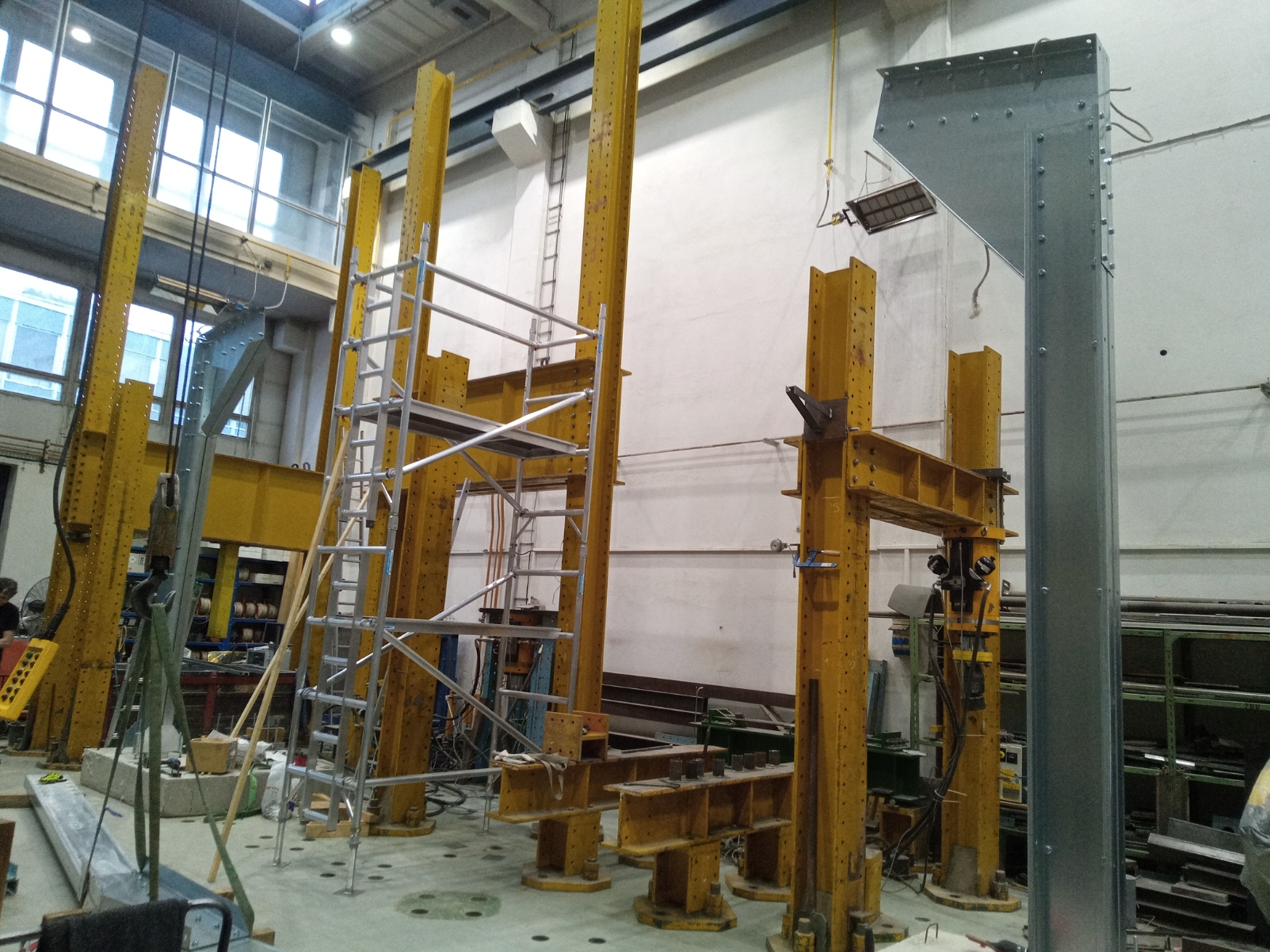


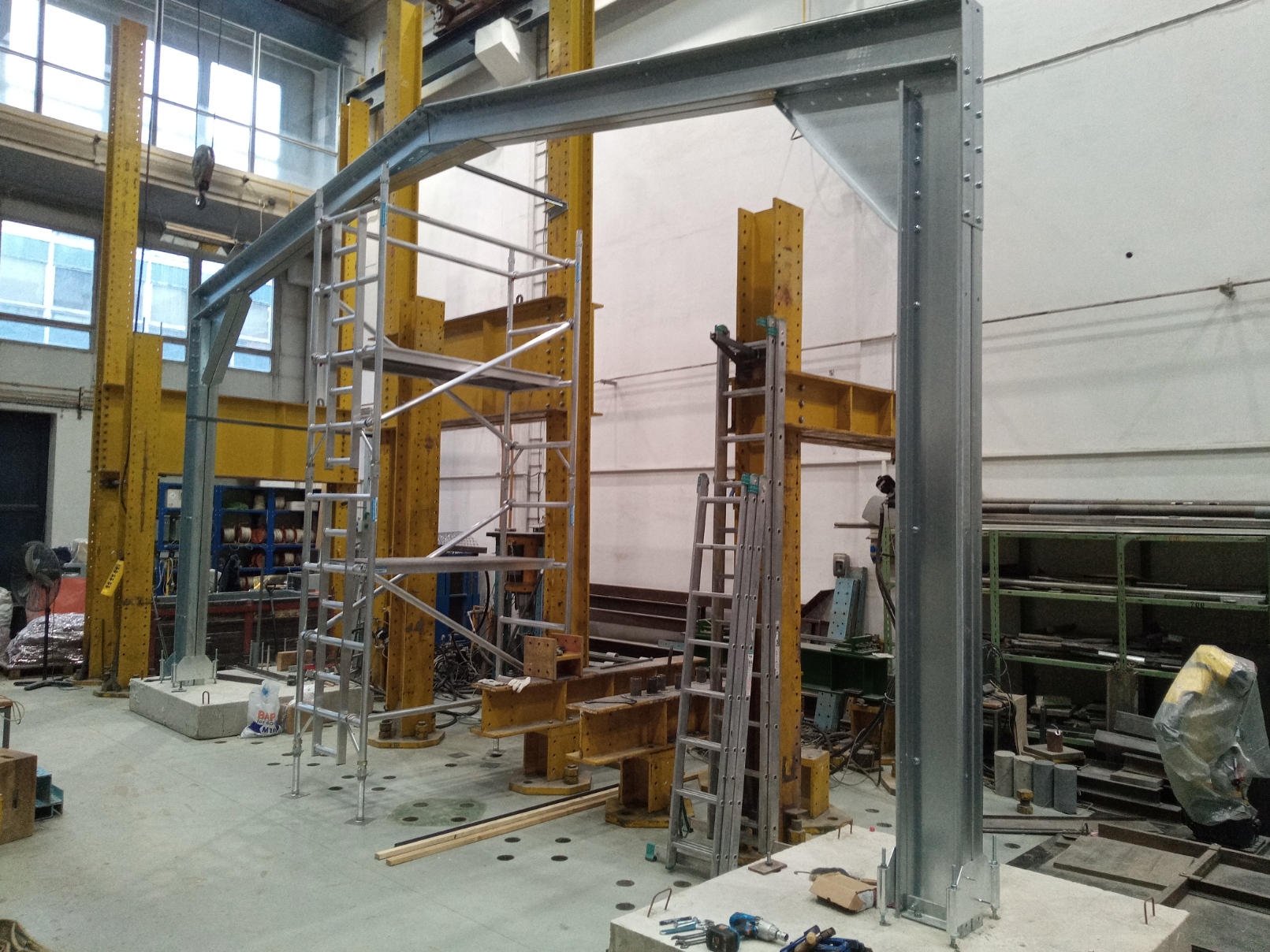
The optimal design of portal frame made of light gauge cold formed steel profiles is achieved trough the optimization of the distribution of internal forces such as bending moments, shear and axial force along the frame. Currently, a pinned column base connection formed from angle cleats bolted trough the column web and anchored to the concrete foundation is a typical design. As the apex and the eave connections are semi-rigid the governing design case is often horizontal sway deformation of the frame. More efficient designs can be achieved through the increased rotational stiffness of a column base. The increase should be in proportion to the rotational stiffness of eave and apex connections.
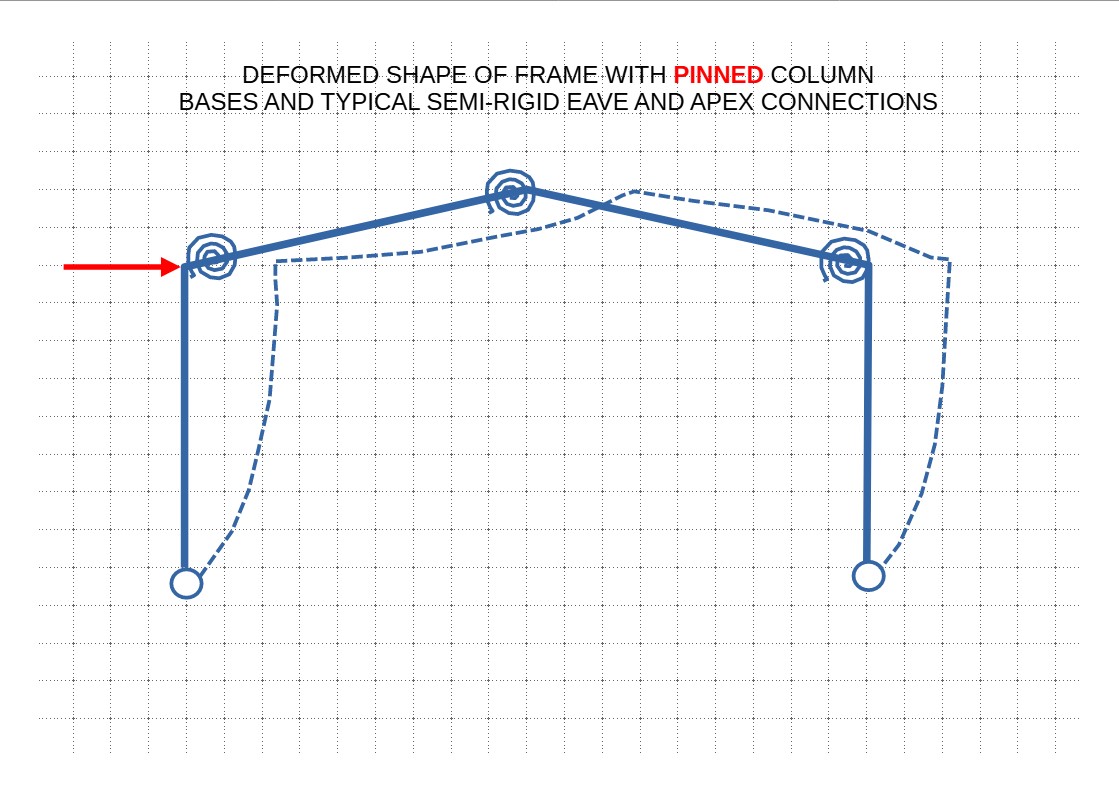
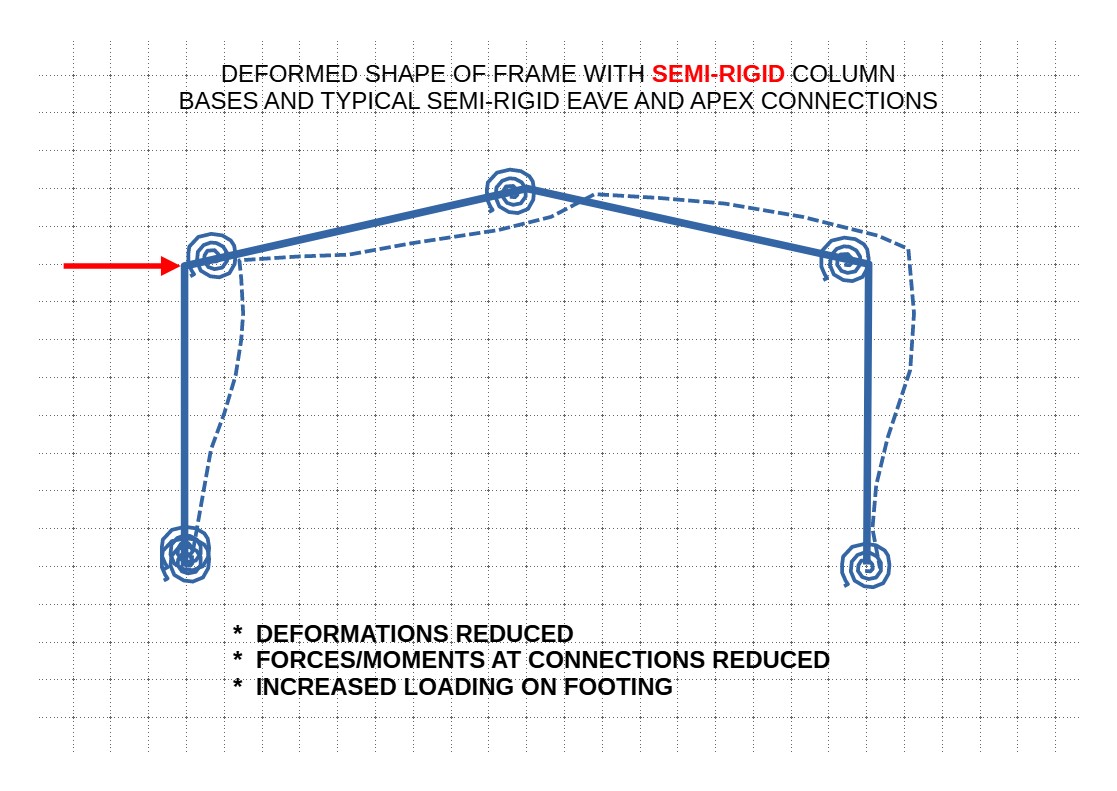
Semi-rigid column bases do reduce horizontal sway deformation. Also, bending moments at eave connection gets reduced while bending moments at the apex connection gets increased. Understanding of this response allows for more efficient design.
Semi-rigid connection
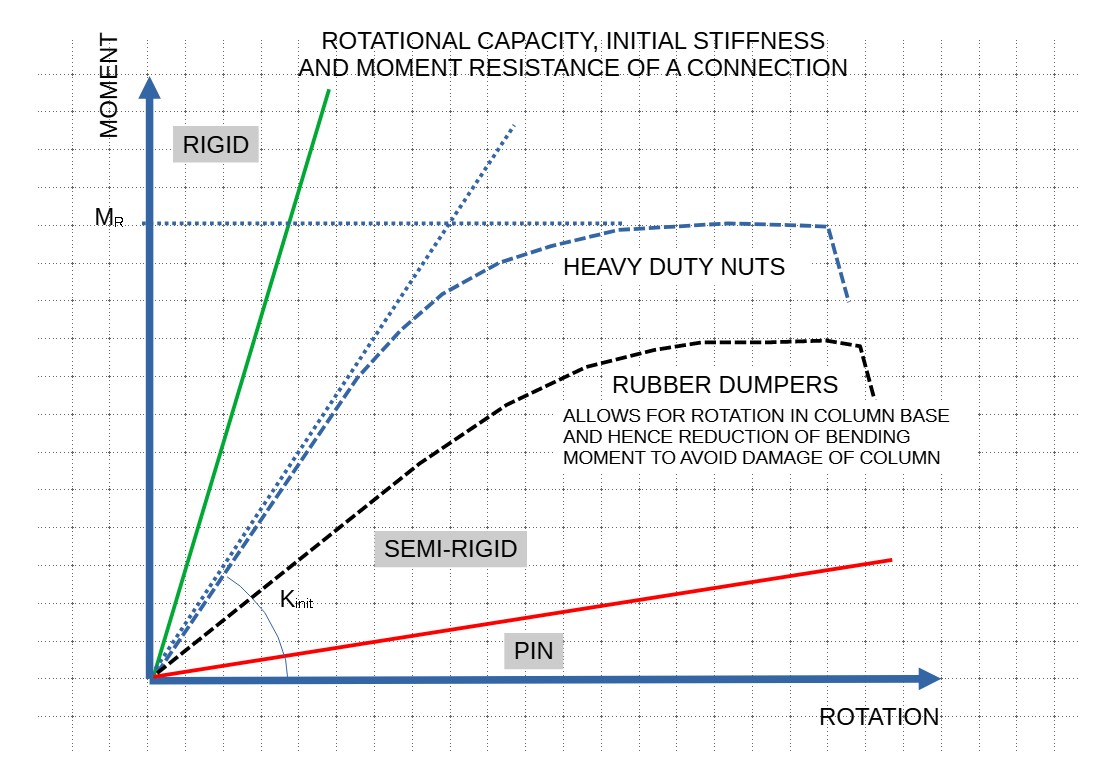
Achieving a rigid joint when connecting two cold formed members such as column and rafter is difficult. In structural analysis we typically assume semi-rigid response. The following figure shows the definition of rotational stiffness, rotational capacity and strength in a moment-rotation chart.
Assembly, rectification of verticality, forces transferred by the connection and timeline of the assembly
Verticality of the column may be rectified by securing and rectifying nuts. This can be achieved on bare column with a very little effort. On portal frame that has already been assembled the temporary propping may be required. This can be used in an existing buildings where for example solar panels are added


The above flowchart shows the timeline of the assembly, or in other words the point in time when the bracket was mounted to the frame and it's effect to the distribution of forces and what level of loading is transferred by the connection.